★★★★★
4.9 Google 1.5k+ Reviews · 4.7 Yelp 1.2k+ Reviews
Water Heater Repair and Replacement. Phoenix, AZ.
Gas, electric, tankless, or heat pump, our licensed technicians diagnose and repair all water heater types the same day you call. When repair isn't the right call, we install quality replacement units at upfront, transparent pricing. No upsells. Lawson has handled more water heater replacements in the East Valley than any other plumber, and we back every install with a written guarantee.
Warning Signs
Most water heater failures don't happen without warning. Catching these early keeps a manageable repair from becoming an emergency replacement, and protects your home from water damage in the process.
The most obvious sign. In gas units, a failed pilot light or faulty thermocouple is often the cause. In electric models, a burned-out heating element is the usual culprit. Both are typically same-day repairs when available, if caught before the tank fails entirely.
Hot water that fluctuates or runs out faster than it used to points to a failing thermostat or heating element. In aging tanks, sediment buildup reduces the effective hot water capacity, causing shorter hot showers and inconsistent output.
These sounds are sediment hardening and shifting on the bottom of the tank. As mineral buildup accumulates, the heating element works harder and less efficiently. Left untreated, it accelerates corrosion and significantly shortens the unit's lifespan.
Orange or brown water from hot taps indicates corrosion inside the tank. The anode rod, which sacrificially attracts corrosive elements, may be depleted. Once the tank itself starts corroding, replacement is typically the right call. Don't wait on this one.
Puddles or moisture around the base of your water heater can indicate a failing pressure relief valve, loose fittings, or a crack in the tank itself. Minor connection leaks are repairable. A cracked tank requires immediate replacement to prevent serious water damage.
Most storage water heaters have an 8 to 12 year lifespan. If yours is past 10 and showing any of the above signs, you're in the replacement window. Proactive replacement on your schedule is far better than an emergency failure at 6am on a Sunday.
What We Service
Not every plumber works on all four unit types. Our technicians are trained and equipped for gas, electric, tankless, and heat pump systems, so you get the right diagnosis regardless of what you have installed.
The most common type in Arizona. Fast heating, high first-hour output, and lower operating costs than electric in most cases. Common repairs include pilot light issues, thermocouple failures, gas control valve problems, and sediment flushing.
Easier to install and no venting required. Common repairs include heating element replacement, thermostat failure, and circuit breaker issues. Electric units convert nearly all energy to heat, making them efficient when sized correctly for the household.
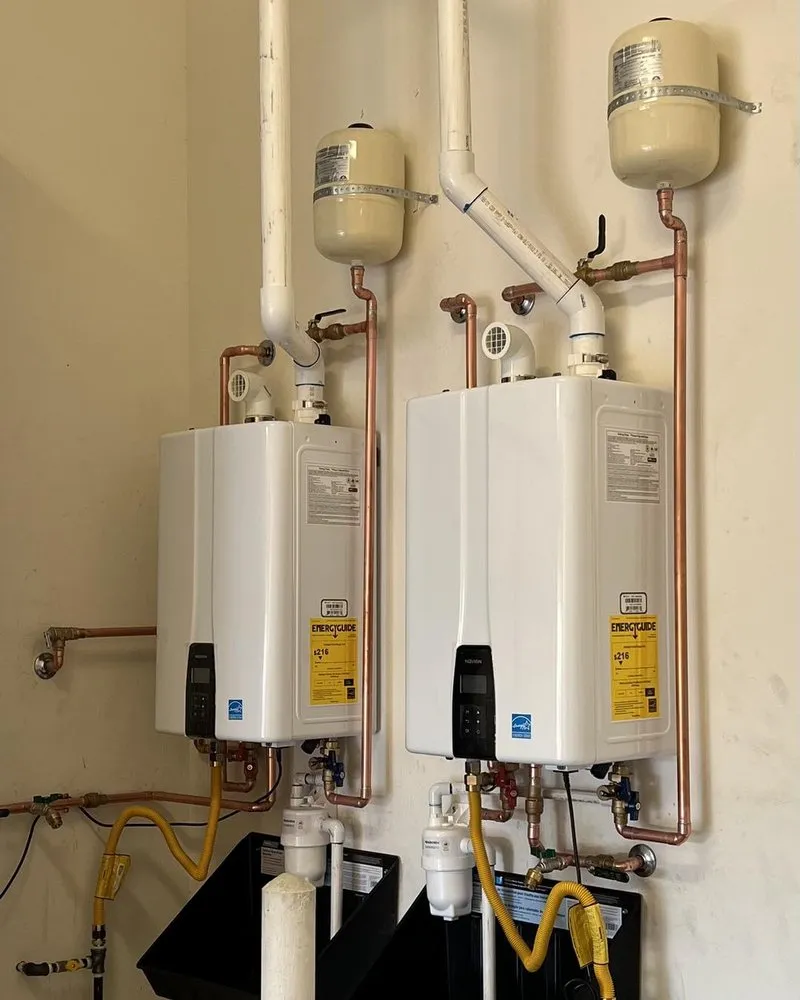
Heats water on demand with no storage tank, delivering unlimited hot water and significant energy savings. Common service needs include scale descaling (critical in AZ hard water), flow sensor issues, ignition failures, and venting problems. Requires annual maintenance.
Transfers heat from surrounding air rather than generating it directly, making them 2-3x more efficient than standard electric units. Best suited for unconditioned spaces with warm ambient air. Common issues include refrigerant, compressor, and control board failures.
Our Services
Every service call starts with an honest diagnosis. We tell you what's wrong, what it costs to fix, and whether repair or replacement makes more financial sense for your specific unit and situation.
Repair or Replace
Most plumbers push replacement because the ticket is bigger. Lawson tells you the honest answer: repair when it makes sense, replace when it doesn't. We lay out the cost comparison so you can make an informed decision.
By the Numbers
Water heaters are one of the highest-cost plumbing decisions a homeowner makes. Understanding the numbers helps you make the right call, not the most expensive one.
Preventive Maintenance
In Arizona's hard water environment, neglecting maintenance doesn't just shorten your water heater's life. It costs you money in reduced efficiency every single month. These three tasks are the difference between a 10-year unit and a 15-year one.
Sediment from Arizona's hard water accumulates at the bottom of your tank and on heating elements every year. It insulates the elements from the water, forcing them to work harder and use more energy to reach temperature. Annual flushing removes this buildup, restores efficiency, eliminates the popping and rumbling noises it causes, and prevents the corrosion that shortens tank life.
Once per yearThe anode rod is a sacrificial magnesium or aluminum rod that attracts corrosive elements so they attack the rod instead of the tank walls. Once the rod is fully depleted, corrosion moves directly to the tank. In AZ's mineral-heavy water, rods deplete faster than the national average. Replacing a $30-50 rod every 3-5 years is the single most cost-effective thing you can do to avoid premature tank replacement.
Every 3 to 5 yearsThe temperature and pressure relief valve (T&P valve) is a critical safety device that releases water if internal pressure or temperature exceeds safe limits. A stuck or failed PRV is a serious safety hazard. Testing involves lifting the lever briefly to confirm it opens and reseats correctly. A valve that doesn't release, leaks after testing, or shows mineral buildup around the discharge pipe needs immediate replacement.
Every 6 monthsWhy Lawson
We've been servicing water heaters across the Valley since 2011. Gas, electric, tankless, heat pump: we've seen every failure mode, diagnosed it correctly, and fixed it right. That experience is what you're paying for.
We inspect every component before quoting repairs. No replacing parts based on guesses. No upselling replacement when repair is the right answer.
Full cost before we start. No surprise labor charges after the fact.
A dead water heater isn't something you schedule a week out. We're available same day for most calls across the Phoenix metro.
Background-checked technicians. An A+ Better Business Bureau rating. Crimshield certification for your peace of mind. We earn your trust before we walk in the door.
What Our Customers Say
"Great service. Robert was awesome. The price is just right. They showed up on Sunday and by Monday at 10am, I had my new water heater installed. Great company to work with."
"I want to give a huge shoutout to Robert. He arrived on time, was very patient with all of my questions, professional, and extremely knowledgeable. The communication was great from the start. Because of Robert I will definitely call Lawson for any future plumbing needs."
"We've used them twice for two different projects and they were awesome both times. Fast, efficient, fixed our issues and were competitively priced. Will use again for any and all future plumbing needs. Highly recommend!"
Common Questions
Minor repairs like a thermostat reset or pilot relight can be under $100. Component replacements (heating element, thermocouple, anode rod, PRV) typically run $150 to $400 including labor. Major repairs like a gas control valve or significant leak can reach $500 to $600. We provide an upfront quote before any work begins so there are no surprises.
If the unit is under 8 years old and the issue is a single component, repair almost always makes more financial sense. If it's over 10 years old, frequently needing service, showing rust, or leaking from the tank itself, replacement is the smarter investment. We give you the honest cost comparison so you can decide with real numbers in hand.
Sediment buildup is the leading cause, especially in Arizona's hard water. Minerals accumulate at the bottom of the tank and on heating elements over time, reducing efficiency and accelerating corrosion. Annual flushing prevents this. After sediment, failing heating elements in electric units and thermocouple failure in gas units are the next most common causes.
Shorter than the national average without maintenance, because of our hard water. A standard storage heater typically runs 8 to 10 years in Arizona without annual flushing. With proper maintenance (annual flush, anode rod replacement every 3-5 years, PRV testing), 12 to 15 years is achievable. Tankless units can last 20+ years with annual descaling.
Tankless units provide unlimited hot water on demand, use significantly less energy (only heating water when needed), last nearly twice as long as storage tanks, and free up space. The tradeoff is higher upfront cost and the requirement for annual descaling in AZ hard water. For a family that's frequently running out of hot water, the upgrade typically pays for itself within 5-7 years.
Once a year for a storage tank water heater: flush the tank to remove sediment, check the anode rod, and test the pressure relief valve. Tankless units need annual descaling in Arizona due to hard water, along with a filter and inlet screen check. These aren't optional in the Phoenix metro. Skipping maintenance is the fastest way to shorten your unit's life and raise your energy bill.
In most parts of the country, a tank water heater lasts 10 to 15 years. In Phoenix, hard water significantly accelerates sediment buildup inside the tank, shortening that lifespan to 7 to 10 years without regular maintenance. Annual tank flushing and a whole-home water softener are the two most effective ways to extend it. If your unit is over 8 years old and showing signs of trouble, replacement is usually more cost-effective than repair.
Ready When You Are
Same-Day When Available. Upfront pricing. Honest repair vs. replace guidance.
BBB A+ rated. 100% satisfaction guaranteed. 15 years of earning that trust, one job at a time.
Available 7am-7pm daily. 24/7 for emergencies.